
Zeta Potential Analysis for Nanoparticles and Biotechnology
Zeta potential quantifies the electrokinetic potential at the slipping plane of nanoparticles and predicts colloidal stability, electrophoretic mobility, and interaction propensity in biological media electrophoretic mobility. Measurement relies on electrophoretic techniques (ELS, PALS, microelectrophoresis) with conversions to zeta limited by double-layer thickness and ionic strength. Careful sample preparation, calibrated instrumentation, and controlled pH/ionic composition are essential to avoid artefacts. Values > |30 mV| generally indicate electrostatic stability; further sections outline instrumentation choices, pitfalls, and optimization strategies for biotechnology applications.
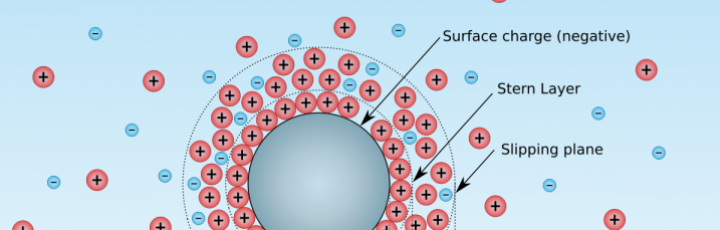
Principles of Zeta Potential and Electrophoretic Mobility
In colloidal systems, zeta potential quantifies the electrokinetic potential at the slipping plane and governs particle stability by reflecting the balance of surface charge, adsorbed ions, and the surrounding ionic atmosphere. The concept derives from electrokinetic theory linking surface chemistry to observable motion under an applied field. Electrophoretic mobility is proportional to zeta potential through models; for thin double layers the Smoluchowski approximation provides a linear relation enabling facile conversion https://laballiance.com.my/. Deviations arise with thick double layers, high ionic strength, or nonpolar solvents, requiring corrected models. Control of pH, ionic composition, and surface modification manipulates zeta potential to tune colloidal stability.
Instrumentation and Measurement Techniques
Across laboratories, a narrow set of instrument classes—electrophoretic light scattering (ELS), phase-analysis light scattering (PALS), microelectrophoresis, and electroacoustic analyzers—provides the primary means to determine zeta potential, each employing distinct signal transduction principles, sample handling requirements, and applicable concentration/ionic-strength ranges. Instrument selection depends on particle size, conductivity, and desired throughput. Critical operational controls include rigorous instrument calibration and periodic laser alignment for optical systems, plus validation of electrode geometry and field uniformity. Data interpretation requires understanding algorithmic conversions from electrophoretic mobility to zeta potential and recognizing instrument-specific limitations to guarantee reproducible, traceable measurements.
Sample Preparation and Common Pitfalls
Following selection of appropriate instrumentation and verification of measurement parameters, attention shifts to sample preparation, where small procedural variances can produce large deviations in measured zeta potential. The practitioner must control sample dilution to maintain particle concentration within instrument linear range while avoiding ionic strength changes that alter double-layer properties. Buffer selection requires matching ionic composition and pH to the experimental context and minimizing multivalent ions or surfactants that adsorb to surfaces. Filtration, degassing, and temperature equilibration reduce artefacts; gentle handling prevents aggregation. Rigorous documentation of preparation steps enables reproducibility and diagnostic tracing of anomalous measurements.
Interpreting Zeta Potential for Colloidal Stability
When evaluating colloidal stability, zeta potential serves as a quantitative indicator of the electrostatic repulsion governing particle interactions and the likelihood of aggregation. Interpretation requires thresholds: |ζ| >30 mV typically predicts stable dispersions, whereas low absolute values imply vulnerability to particle aggregation. Ionic strength modulates the electrical double layer; increased ionic strength compresses the layer, reduces measured ζ, and raises aggregation risk. Assessments should integrate pH, surface chemistry, and measurement conditions to distinguish true instability from transient screening effects. Decisions on formulation or processing follow from controlled manipulation of these parameters to achieve reproducible, targeted colloidal stability.
Applications in Drug Delivery, Vaccines, and Diagnostics
Control of zeta potential directly influences nanoparticle stability control, dictating aggregation kinetics and circulation lifetime in biological media. Precise surface charge optimization enables tuning of cellular uptake, protein corona formation, and immunogenic profiles critical for drug delivery and vaccine platforms. In diagnostics, engineered zeta potential enhances sensor sensitivity and specificity by modulating particle–analyte interactions and nonspecific adsorption.
Nanoparticle Stability Control
In the context of drug delivery, vaccines, and diagnostics, nanoparticle stability control determines circulation time, biodistribution, antigen presentation, and assay reproducibility. Control strategies focus on predictable aggregation resistance, opsonization minimization, and functional preservation. Ionic strength tuning and polymer grafting modulate interparticle forces and steric barriers to tailor performance under physiological conditions. Analytical metrics guide iterative optimization for intended applications.
- Define target environment and stability thresholds.
- Apply ionic strength tuning to adjust screening and aggregation kinetics.
- Use polymer grafting to confer steric stabilization and functional stealth.
- Validate stability under simulated physiological flow and storage conditions.
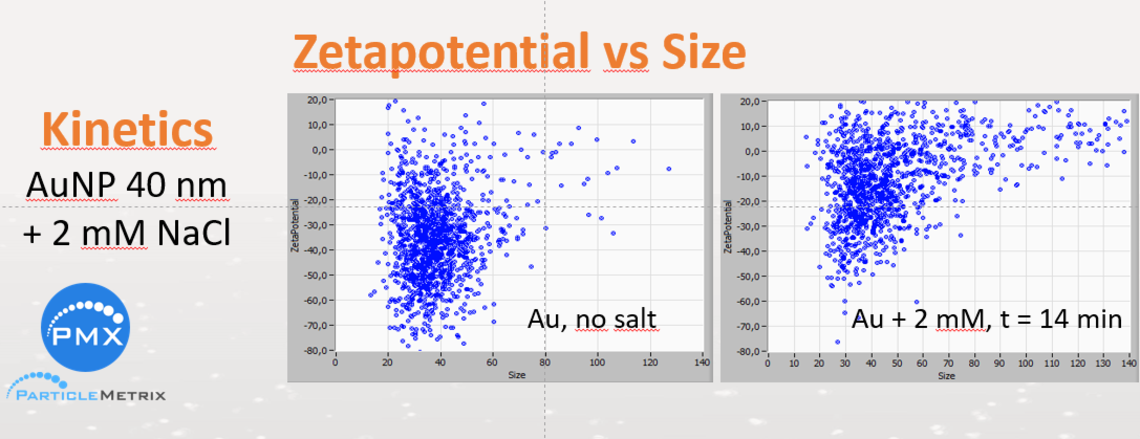
Surface Charge Optimization
Optimize surface charge to tune nanoparticle interactions with biological systems, balancing colloidal stability, cellular uptake, and immune recognition. The discussion emphasizes surface modification strategies and charge tuning to achieve predictable pharmacokinetics and targeted delivery. Controlled zeta potential adjustments reduce aggregation, modulate protein corona formation, and influence endocytosis rates. In vaccine platforms, precise charge profiles enhance antigen presentation while limiting unintended inflammation. For diagnostics, optimized charge improves biodistribution and signal-to-noise. Implementation requires quantitative assays, reproducible chemistry, and iterative feedback between in vitro and in vivo studies. Decision-making prioritizes functional endpoints, manufacturability, and regulatory compatibility.
Best Practices for Reproducibility and Regulatory Compliance
When establishing protocols for zeta potential measurements, laboratories should prioritize standardized sample preparation, instrument calibration, and detailed reporting to guarantee reproducibility and meet regulatory expectations. The framework emphasizes quality assurance and regulatory harmonization through validated methods, traceable calibration, and controlled environmental parameters. Documentation must enable independent replication and audit readiness. Data integrity, uncertainty quantification, and versioned SOPs support consistent interpretation across studies and jurisdictions.
- Define validated sample handling and concentration limits.
- Implement scheduled instrument calibration and performance checks.
- Maintain complete metadata, raw data, and uncertainty estimates.
- Align procedures with regulatory guidance and interlaboratory comparison results.
Conclusion
Zeta potential measurement provides a quantitative, mechanistic indicator of nanoparticle surface charge and colloidal behavior, linking electrophoretic mobility to interparticle forces. Accurate instrumentation, meticulous sample preparation, and awareness of artifacts are essential for reliable data. Interpreting zeta values within formulation context informs stability, targeting, and safety decisions in drug delivery, vaccines, and diagnostics. Standardized protocols and documentation enhance reproducibility and regulatory acceptance, enabling zeta analysis to guide rational nanoparticle design and quality control.
